Search Warrants & Digital Evidence Preparation
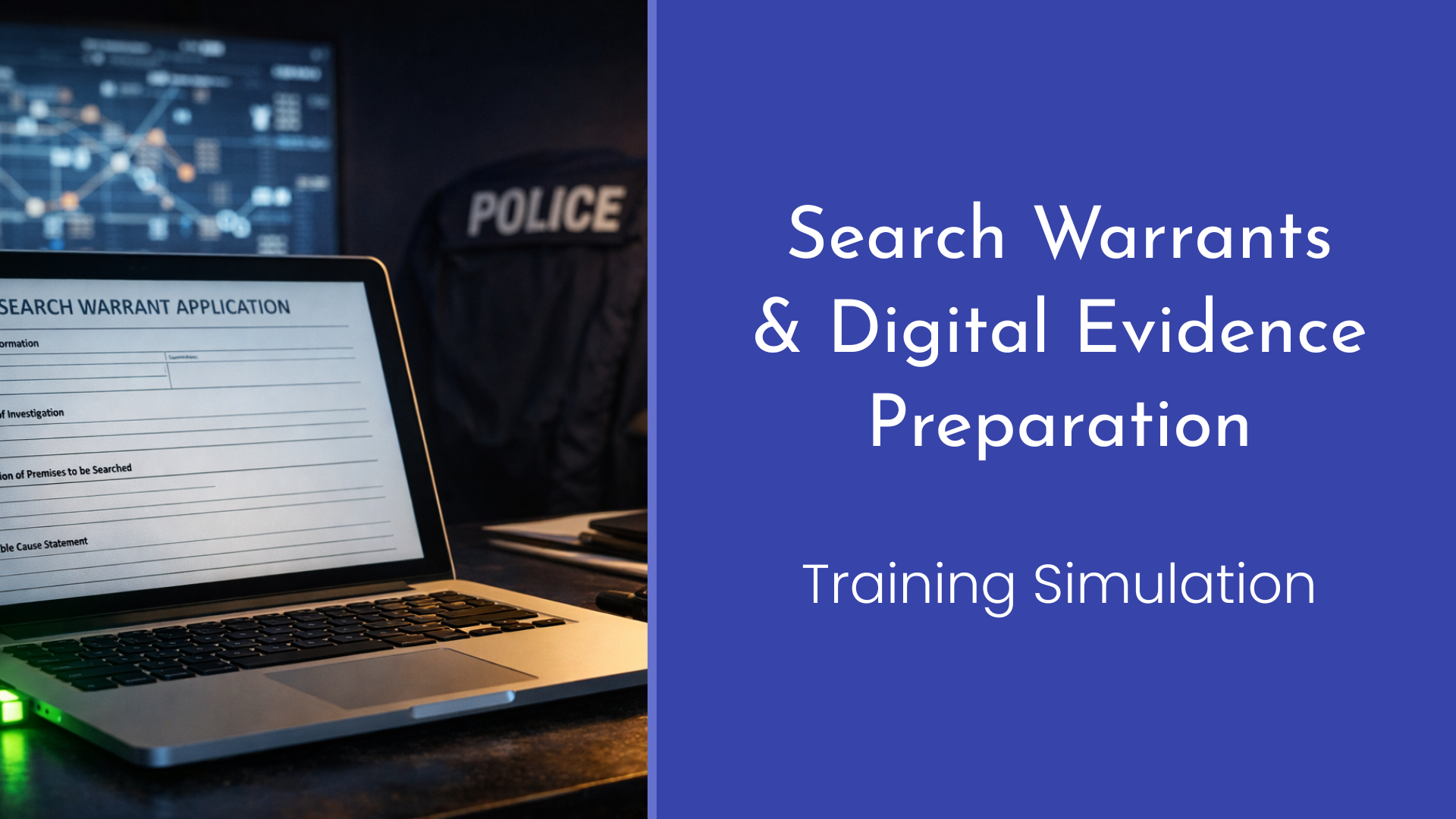
Navigate the complexities of modern search warrant requirements and digital evidence in this comprehensive, scenario-based training. Participants will bridge the gap between legal theory and practical application, mastering the drafting process for cloud and social media data while creating the foundation of a professional CV.
Suggested Audience: Law enforcement
Full Description: This intensive, hands-on course provides investigators with the core skills necessary to successfully navigate the evolving landscape of search warrants and digital evidence. As criminal activity increasingly moves into digital spaces, law enforcement must be adept at meeting both 4th Amendment and state-specific constitutional requirements to ensure evidence remains admissible and survives suppression challenges.
Moving beyond simple lecture, this training utilizes scenario-based learning to immerse participants in the practicalities of the warrant process. Attendees will work through the mechanics of establishing probable cause and drafting warrants for complex data sources, including GPS, semantic location data, and cloud-based social media platforms.
A unique pillar of this course is its focus on long-term professional development. To support future expert testimony and bolster courtroom credibility, participants will begin the process of creating a professional Curriculum Vitae (CV). By simulating the documentation and service process, this course ensures that officers are prepared to handle digital evidence from the initial identification stage through to the final courtroom presentation.
Learning Objectives:
Demonstrate a comprehensive understanding of 4th Amendment and state constitutional requirements to mitigate suppression risks and ensure case law compliance.
Successfully establish probable cause and draft precise warrants for digital evidence, including cloud storage, social media accounts, GPS, and semantic location data.
Navigate the lifecycle of a search warrant by working through actual serving scenarios, from initial evidence identification to the completion of formal documentation.
Construct the foundation of a professional CV designed to support expert testimony credentials and withstand scrutiny during the legal process.
Speaker(s): Robert Peters, Gary Weaver