Child Abuse Investigations for Patrol Officers
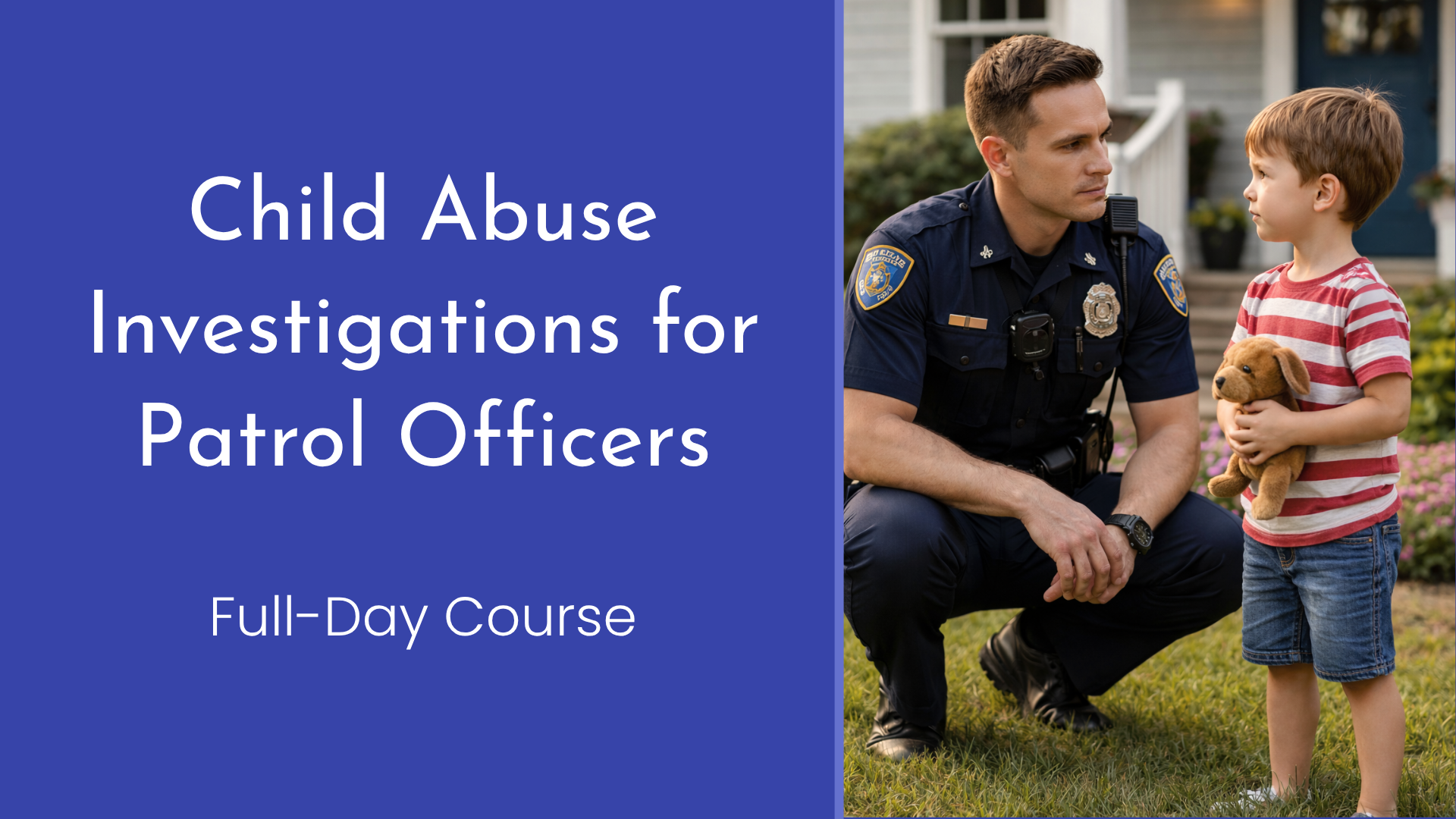
This interactive full-day training equips patrol officers with the essential skills to identify and investigate various forms of child maltreatment, ranging from physical and sexual abuse to drug exposure. Through a focus on trauma-informed approaches and forensic evidence, officers will learn to coordinate with specialized agencies to build stronger cases and better protect vulnerable children.
Suggested Audience: Law enforcement
Full Description: This comprehensive, interactive day-long course is designed to bridge the gap between initial police response and successful prosecution in cases of child maltreatment. Patrol officers often serve as the first point of contact in these sensitive situations; therefore, this training focuses on increasing officer confidence by highlighting commonly overlooked indicators of abuse, such as strangulation and drug exposure. Participants will explore the legal framework of reporting obligations and the specific roles played by various agencies during an investigation.
The curriculum prioritizes a trauma-informed approach, teaching officers how to interact with children effectively by understanding developmental factors and conditions like dissociative disorder. To ensure a thorough investigation, the course covers:
Best practices for the documentation, preservation, and processing of evidence.
How to effectively utilize Child Advocacy Centers (CAC) and Multidisciplinary Intervention Teams (MDIT).
A deep dive into Pediatric Sexual Assault Forensic Exams, including the requirements for these exams and how to integrate their findings into a criminal investigation.
Analysis of common investigative mistakes and practical strategies to overcome them.
By the end of the session, officers will have a clear protocol for responding to abuse, understand the nuances of physical maltreatment, and be prepared to coordinate complex investigations with professional confidence
Learning Objectives:
Identify various forms of child maltreatment—including physical, sexual, and drug exposure—and recognize often overlooked signs like pediatric strangulation.
Apply trauma-informed approaches and child development factors to improve investigative interactions with young victims.
Execute effective evidence preservation and documentation while coordinating with Multidisciplinary Intervention Teams (MDIT) and Child Advocacy Centers (CAC).
Integrate Pediatric Sexual Assault Forensic Exams into investigations to collect vital information and minimize common procedural errors.
Analyze legal requirements, agency roles, and mandatory reporting obligations to ensure a compliant law enforcement response.
Sample Agenda:
8:30-9:30 | Workshop 1 — Laws, Agency Roles, and Reporting Obligations
9:30–10:30 | Workshop 2 – Types of Abuse & Response Protocols
10:30–11:30 | Workshop 3 — Working with the Child
11:30–12:00 | Lunch
12:00–1:30 | Workshop 4 – Gathering, Preserving, and Processing Evidence
1:30-2:00 | Workshop 5 – Utilizing the MDT and CAC
2:00–3:30 | Workshop 6 – Understanding Common Issues with Identifying Physical Abuse
3:30–4:30 | Workshop 7 – Pediatric Sexual Assault Forensic Examinations
4:30–5:00 | Wrap-Up and Review
Speaker(s): Gary Weaver & Robert Peters